USA
USA Italy
Italy France
 UK
UK Germany
 Japan
Japan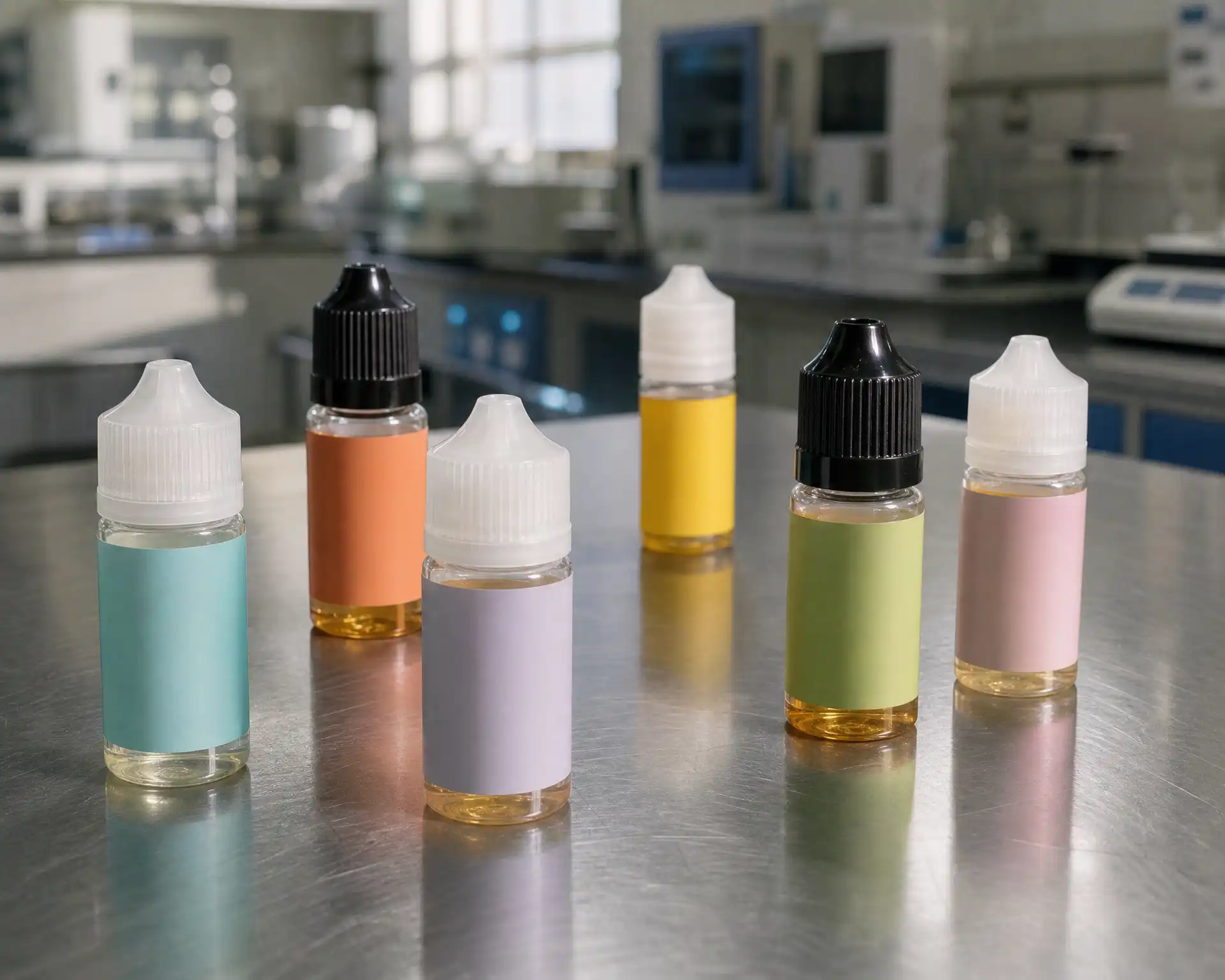
E-liquid does not always look the same from the day you buy it to the day you finish the bottle. A clear vape juice can gradually become amber or darker, a familiar flavor can seem different after months on the shelf, and some bottles may change more noticeably than others. These changes often lead to the same questions: Why does vape juice turn brown? Does nicotine oxidation cause it? Does the flavor itself affect the color? And does the bottle material matter?
Why does vape juice turn dark?
Hover to see what can actually cause e-liquid to change color.
It is not always just nicotine oxidation.
Nicotine, flavoring chemicals, light, temperature, oxygen, and storage time can all contribute to changes in e-liquid color. Different formulations can also behave differently under the same storage conditions.
The chemistry behind e-liquid storage is more complicated than simply saying that dark juice has gone bad. E-liquid is a mixture of ingredients, commonly including propylene glycol (PG), vegetable glycerin (VG), nicotine in nicotine-containing products, and flavoring chemicals. Light, temperature, oxygen, storage time, and contact with packaging materials can all become relevant as the liquid ages.
This guide looks at published research on e-liquid stability, official storage guidance from the U.S. Food and Drug Administration, and research into materials used in e-liquid containers to explain what happens to vape juice during storage and how to store it more carefully.
Why Does E-Liquid Change Color?
One of the most common questions in vaping communities is why vape juice turns darker over time. A change from clear or pale liquid to yellow, amber, or brown can happen for several reasons, and color alone does not provide a complete picture of an e-liquid’s condition.
Flavor Formulation Can Affect the Starting Color
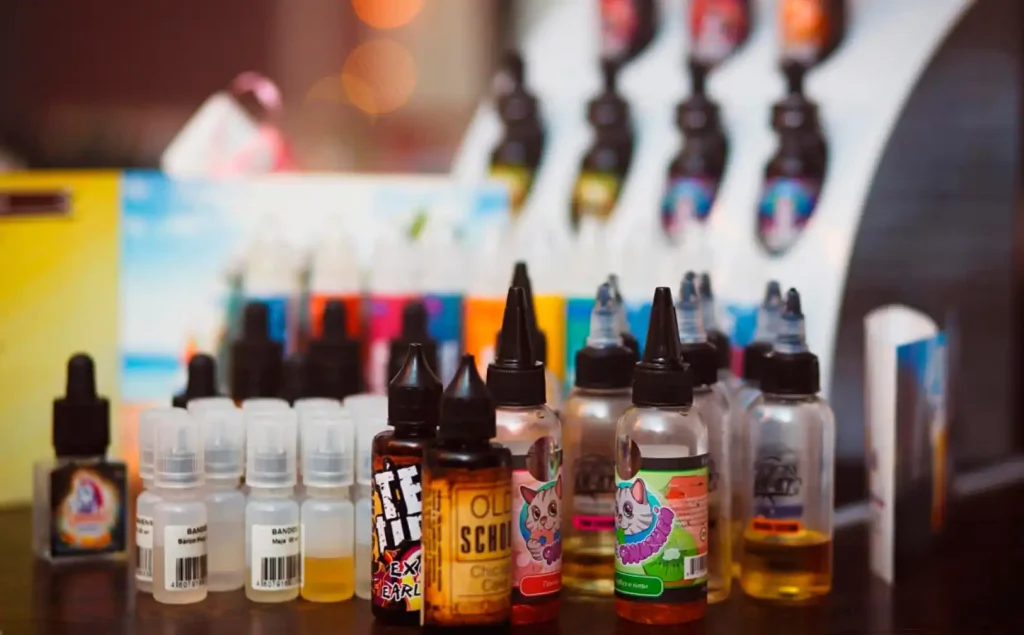
Not every e-liquid begins with the same appearance. Flavoring formulations contain different chemical compounds, and those compounds can behave differently during storage. Vanilla, bakery, dessert, tobacco, fruit, mint, and cooling profiles may therefore show different color and stability characteristics.
Importantly, it is better not to treat a flavor category as a fixed color rule. A “fruit flavor” is not automatically clear, and a “dessert flavor” is not automatically dark. The specific flavoring chemicals and their concentrations matter more than the name printed on the bottle.
Does Nicotine Make Vape Juice Darker?
Nicotine is one factor associated with e-liquid darkening. Research on e-liquid aging has observed visible darkening in nicotine-containing reference liquids, while a solvent control did not show the same pattern. The researchers noted that nicotine degradation may contribute to changes in both color and pH, although the chemistry of a commercial e-liquid is more complicated than nicotine alone.
In a 24-month study of 20 flavoring chemicals, the researchers also found that storage conditions strongly affected color. Most reference liquids became noticeably darker under ambient light, while liquids kept in cold, dark conditions generally showed less darkening. Read the full e-liquid stability study for the experimental conditions and results.
Do Different Vape Flavors Change Color Differently?
Yes, the individual chemicals used to create a flavor can have very different stability profiles. The 24-month study examined compounds including benzaldehyde, menthol, vanillin, cinnamaldehyde, furaneol, limonene, maltol, ethyl maltol, and triacetin.
Under ambient light, 11 of the 20 tested flavorings had lost at least 50% of their initial concentration after six months, increasing to 16 of 20 after 24 months. Under cold, dark conditions, only 4 of 20 reached the same 50% loss threshold after six months and 5 of 20 after 24 months.
Some compounds were particularly sensitive to the storage environment. Cinnamaldehyde, ethyl salicylate, furaneol, limonene, methyl salicylate, and triacetin showed substantial losses under ambient-light conditions. By contrast, menthol and several other compounds retained at least 50% of their initial concentration across the tested conditions.
This helps explain why two bottles of vape juice stored for the same amount of time may not look or taste the same. The formulation itself matters.
What Happens to E-Liquid During Storage?
When people talk about old vape juice, terms such as steeping, oversteeping, oxidation, and flavor change often appear in vaping discussions. These terms describe observations made by users, but the underlying chemistry can involve several different processes.
Light, Temperature, Oxygen, and Time
These four factors are useful starting points when thinking about e-liquid storage. Light can drive photochemical reactions, while higher temperatures can accelerate some chemical changes. Oxygen can participate in oxidation reactions, and longer storage simply gives these processes more time to occur.
The strongest direct evidence comes from controlled aging research. In the 24-month study, reference solutions were stored under three conditions: ambient light, ambient dark, and cold dark. The cold-dark condition was maintained at 4.0 ± 2.0°C. Flavorings stored under ambient light were generally the least stable, while reducing light exposure and using cold storage delayed degradation for several compounds.
What Does Oxidation Actually Mean?
Oxidation is often used as a catch-all explanation for darkening, but e-liquid chemistry is more complex. The researchers identified possible degradation pathways including oxidation, hydrolysis, and condensation reactions involving flavoring compounds and the PG solvent.
For example, the study identified benzoic acid as a possible oxidation product in a benzaldehyde reference solution. It also found evidence consistent with hydrolysis of cinnamaldehyde and condensation reactions involving vanillin or ethyl vanillin and PG.
What About “Steeping”?
In vaping communities, steeping is commonly used to describe intentional or unintentional changes in e-liquid after it has been left to sit. Some vapers use phrases such as “shake and vape,” “let it steep,” or “the flavor got better after a few weeks.” These are useful descriptions of user experience, but they should not be treated as a single scientifically defined process.
From a chemical perspective, several reactions may occur simultaneously as an e-liquid ages. A change in flavor does not automatically mean that one specific reaction has taken place.
Does the Bottle Material Matter?
The container is part of the storage environment. E-liquid can come into contact with glass, plastics, metals, elastomers, seals, and other components, which is why container materials are also studied in relation to e-liquid stability and chemical migration.
Glass E-Liquid Bottles
Glass is commonly used for liquid packaging and can provide a different material interface from plastic. Clear glass, however, does not block light in the same way as an opaque or amber container. For an e-liquid that is sensitive to light, the container’s ability to limit light exposure can therefore matter as much as the base material itself.
It is also important not to interpret this as “glass is always better.” Container performance depends on the complete packaging system, including the closure, liner, formulation, and storage conditions.
Plastic E-Liquid Bottles
“Plastic bottle” is not a single material. E-liquid containers may use different polymers, including materials such as LDPE and PET, and each polymer has its own physical and chemical characteristics.
A 2026 study specifically investigated extractable and leachable compounds from ENDS components and e-liquid containers, including LDPE and PET bottles. Across the products examined, the researchers identified numerous chemical compounds, and LDPE and PET bottles showed comparable but not identical numbers of leachables. See the published LDPE and PET container study.
| Material / Component | What to Consider |
|---|---|
| Glass | Light exposure, physical durability, and compatibility with the complete package. |
| LDPE | Flexible plastic commonly used in squeeze-style containers; material compatibility matters. |
| PET | Rigid plastic used in some liquid containers; its interaction with the formulation can be studied through extractables and leachables testing. |
| Caps, liners and seals | The closure system can also contribute materials that contact the liquid. |
Why the Cap and Closure Matter Too
The bottle itself is only one part of the package. Research describes ENDS container-closure systems as combinations of materials such as plastics, elastomers, glass, and metals. These materials can potentially contribute leachable compounds to the liquid.
That does not mean that every plastic bottle or pod is unsafe. It means that material compatibility is a real area of scientific evaluation, and that the entire container-closure system matters rather than the bottle material alone. Research on ENDS extractables and leachables explains why these studies are used to distinguish compounds originating from packaging from compounds generated naturally as e-liquid ages.
How Should You Store E-Liquid?
For everyday storage, the basic goal is simple: reduce unnecessary exposure to light and heat, keep the bottle closed, and follow the manufacturer’s instructions.
Store Vape Juice in a Cool, Dark Place
Avoid leaving e-liquid in direct sunlight, near a heat source, or in another location where temperatures fluctuate significantly. The published 24-month aging study found that light and temperature had measurable effects on flavoring stability, with the greatest instability generally observed under ambient light.
This supports the familiar advice to keep vape juice in a cool, dark place, but it does not mean every consumer needs to refrigerate every bottle. The study’s cold condition was a controlled experimental condition rather than a universal household storage requirement.
Keep the Bottle Tightly Closed
Closing the bottle after use reduces unnecessary exposure to air and helps prevent spills or contamination. The FDA’s e-liquid storage guidance recommends keeping e-liquids in their original containers, securing the caps, and storing them out of the reach and view of children and pets.
Should You Refrigerate or Freeze Vape Juice?
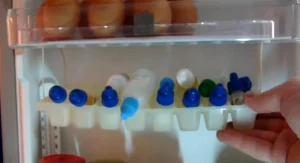
Refrigeration is sometimes discussed in vaping communities because controlled research has found that cold, dark storage can slow the degradation of some flavoring chemicals. However, this is different from saying that all commercial e-liquids must be refrigerated.
Refrigeration
Cold storage can reduce the rate of some chemical changes, but consumers should also consider the manufacturer’s storage instructions and practical issues such as condensation and repeated temperature changes.
Freezing
Freezing should not be treated as a default storage method. There is not enough evidence to establish a universal household recommendation that all e-liquid should be frozen for long-term storage.
Room-Temperature Storage
For everyday use, a stable location away from direct light and excessive heat is a more practical approach. The important point is consistency: avoid unnecessary heat, light, and prolonged exposure to air.
E-Liquid Storage Checklist
How Long Does Vape Juice Last?
Does Vape Juice Expire?
There is no single storage period that applies to every e-liquid formulation. Shelf life can depend on the formulation, ingredients, packaging, storage conditions, and the manufacturer’s specifications.
Rather than assuming that every bottle remains unchanged for a fixed number of years, check the product’s date, labeling, and storage instructions. Research also shows that chemical composition can change during long-term storage even when the liquid remains in a sealed container.
How Can You Tell If E-Liquid Has Changed?
Common questions include “why is my vape juice brown?”, “why did my e-liquid turn dark?”, and “does vape juice go bad?” A color change can be worth noticing, but color alone is not a complete test of product quality.
Pay attention to several signals together: unexpected color changes, unusual odor, unexpected texture or separation, a damaged or leaking bottle, compromised packaging, or storage under conditions outside the manufacturer’s recommendations.
A darker liquid is not automatically spoiled. The research discussed above shows that color changes can accompany chemical changes during aging, while different flavoring compounds behave differently under the same conditions. This is why a simple rule such as “brown juice is bad” is too broad.
When Should You Stop Using an E-Liquid?
If a bottle has been damaged, contaminated, leaking, incorrectly stored, or has developed an unusual smell or appearance that concerns you, replacing it is a more cautious choice than trying to judge its condition from color alone.
Storage is also a safety issue, not just a flavor issue. According to the FDA, nicotine-containing e-liquids can seriously harm children and should be kept in their original containers, securely closed, and out of the reach and view of children and pets.