USA
USA Italy
Italy France
 UK
UK Germany
 Japan
Japan
When a disposable vape is advertised with 30,000, 50,000, or even more puffs, the number looks simple. But a puff count is not a universal measurement of how long a vape will actually last. The result depends on how the device is tested, how long each puff lasts, how much air is drawn through the device, how much e-liquid is vaporized per puff, and how the coil and power system are configured.
This is why two disposable vapes with similar e-liquid capacities can advertise very different numbers of puffs. A high-puff vape is not simply a device with more e-liquid. Its rated performance is also connected to coil resistance, heating power, airflow, puff duration, and the testing method used to determine when the device has reached the end of its usable output.
In this guide, we will first look at how vape puff counts are measured, then examine the different formulas that can be used to estimate puff consumption. We will also look at published research on human puffing behavior, e-liquid consumption, coil resistance, power, aerosol mass, and machine-testing methods before comparing four high-puff disposable vapes: RELX Nova 30K, FLUM Mello Pro 50K, FLUM UT Bar Clear Tank 50K, and GEEK BAR Pulse X2.
What Does a Vape Puff Count Actually Mean?
In today’s high-puff disposable vape market, a large portion of products are concentrated in the 20,000- to 50,000-puff range, with 30K and 50K devices now commonly appearing across the category. Market guides published in 2026 commonly group high-puff products into ranges such as 30K+, 50K, 60K, 80K, and beyond, reflecting how quickly disposable vape capacities have expanded. Recent high-puff market coverage describes products ranging from 30K to nearly 100K puffs.
There are also devices that push far beyond the typical 30K–50K range. The HorizonTech 100K, for example, is advertised at up to 100,000 puffs in Regular Mode and up to 60,000 puffs in Boost Mode, with a 40mL pre-filled e-liquid capacity and a 1,500mAh rechargeable battery.
Apparently, disposable vape puff counts are estimates and are not guaranteed. A puff count is essentially an estimate of how many individual inhalation cycles a vape can produce under a defined testing method. Laboratory and product-testing systems normally control variables such as puff duration, airflow, puff volume, interval between puffs, and the point at which the device is considered to have reached the end of its usable output.
Why “one puff” is not a universal unit
One vape puff can be very different from another. A short 1-second draw and a 4-second draw are both technically one puff, but they do not consume the same amount of e-liquid. The same is true for a small mouth-to-lung draw compared with a large direct-to-lung draw.
A 2015 PLOS ONE study of 20 electronic cigarette users measured real-world puffing behavior and found an average puff duration of 2.65 seconds and an average puff volume of 51 mL. The study also found substantial variation between users, with puff counts ranging from 13 to 42 puffs during a 10-minute session.
This is one reason a high-puff vape rating should not be interpreted as a guaranteed number of personal vaping sessions. Your actual vape puff can be shorter, longer, smaller, or larger than the puff used for the manufacturer’s rating.
Advertised puffs vs. personal puffs
The simplest way to understand a large puff number is to treat it as a test result under specified conditions, rather than as a prediction of exactly how many times an individual person can inhale from the device.
For example, if one laboratory puff consumes 0.004 mL of liquid, a 20 mL reservoir could theoretically provide around 5,000 puffs under that exact consumption rate. If another test uses a puff profile that consumes only 0.001 mL per puff, the same liquid volume would produce a much larger calculated number.
The underlying principle can be expressed as:
Estimated Puff Count = Total Usable E-Liquid ÷ E-Liquid Consumed Per Puff
This formula looks simple, but the difficult part is determining the second value. E-liquid consumption per puff changes with the device and the puffing conditions.
How Are Puff Counts Measured?
There is no single measurement method that explains every puff number printed on a disposable vape. Different manufacturers, laboratories, research groups, and standards can use different puffing regimes. Understanding those regimes is essential when comparing big puff counts.
The 1-second puff method
Some commercial consumer-facing puff-count methodologies use a 1-second puff. Vuse, for example, states that its methodology is based on a 1-second puff duration intended to reflect part of the way consumers use its products.
The basic calculation can be represented as:
N = Total Test Duration ÷ Puff Cycle Duration
However, the actual test does not simply run continuously. A cycle normally includes the puff itself plus the interval before the next puff.
For example, if a hypothetical test uses a 1-second puff every 10 seconds, 100 cycles would contain 100 seconds of active puffing but approximately 1,000 seconds of total test time. The device’s liquid consumption is therefore determined by the complete puffing profile rather than puff duration alone.
The ISO / CORESTA 55/3/30 method
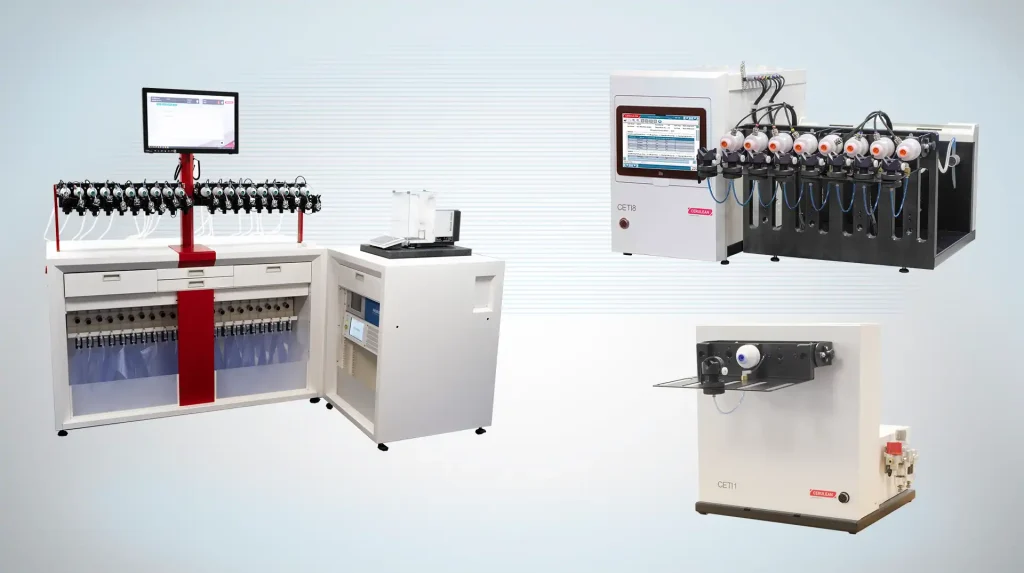
For laboratory aerosol testing, another important reference is the 55/3/30 regime: a 55 mL puff volume, 3-second puff duration, and a 30-second interval between puffs.
CORESTA’s Recommended Method No. 81 formed the basis for ISO 20768, and CORESTA reports the recommended machine regime as a square-shaped 55 mL puff lasting 3 seconds with one puff every 30 seconds. The method is intended for controlled analytical aerosol generation rather than as a prediction of how a particular consumer will vape.
ISO’s current page for ISO 20768:2018 describes the standard as defining parameters and standard conditions for a routine analytical vaping machine. The standard was reviewed and confirmed in 2025, while a 2025 amendment specifically addressed correction of the puff-profile requirements.
Where does 55 mL come from?
If the machine uses a constant flow of approximately 18.3 mL/s for 3 seconds, the theoretical puff volume is:
Puff Volume = Flow Rate × Puff Duration
18.3 mL/s × 3 s ≈ 54.9 mL
which corresponds closely to the nominal 55 mL puff.
This illustrates an important point: puff volume is not the same thing as e-liquid volume. The 55 mL describes the amount of air/aerosol mixture drawn through the system during the test, while the amount of e-liquid actually consumed is measured separately.

Human puff-topography studies
Laboratory machines are useful because they make different products easier to compare under controlled conditions. Human-use studies answer a different question: how people actually puff.
In the PLOS ONE study mentioned earlier, researchers used a CReSS Pocket device to measure puff duration, puff volume, flow rate, peak flow rate, puff count, and the interval between puffs. The average was 51 mL per puff, 2.65 seconds per puff, approximately 20 mL/s flow rate, and 17.9 seconds between puffs.
Another review of electronic cigarette topography studies shows just how wide the experimental range can be. Published studies have used puff durations around 1.8, 2.65, 3.0, and 4.2–4.3 seconds, with some reported puff volumes substantially above 50 mL.
This is why there is no scientifically valid universal conversion such as “one puff always equals exactly 0.002 mL.” The answer depends on the device and the measurement conditions.
Weight-loss and liquid-consumption methods
Another common approach is to weigh a device or cartridge before and after a controlled number of puffs.
The basic formula is:
E-Liquid Consumed Per Puff = (Initial Mass − Final Mass) ÷ Number of Puffs
Then the estimated puff count can be calculated as:
Estimated Puffs = Usable Liquid Mass ÷ Average Liquid Mass Consumed Per Puff
A published study examining manufacturing variation in Vuse ALTO pods used this type of approach. The researchers reported a mean coil lifetime of 158 puffs and approximately 1.93 g of e-liquid consumed until coil failure under their test conditions. They also measured total particulate matter yield per puff.
This method is useful because it connects puff count to actual mass loss. It also demonstrates why the number printed on a commercial disposable should not automatically be compared with a laboratory result unless the testing conditions are comparable.
Different puff-count formulas at a glance
| Method | Basic Formula | What It Measures |
|---|---|---|
| Liquid-volume method | Puffs = Liquid Volume ÷ mL per Puff | Estimated number of puffs from liquid consumption |
| Mass-loss method | Puffs = Liquid Mass ÷ Mass Loss per Puff | Device or pod weight before and after vaping |
| Airflow method | Puff Volume = Flow Rate × Puff Duration | Air drawn through the device |
| Machine puff-count method | Count controlled puff cycles until endpoint | Puff count under a defined test regime |
| Human topography | Puff count + duration + volume + interval | Actual user behavior |
These methods are related, but they are not interchangeable. A 50,000-puff marketing claim and a laboratory measurement using ISO 20768 may answer different questions.
How Much E-Liquid Is Used in One Vape Puff?
This is one of the most commonly misunderstood parts of high-puff vape comparisons. People often ask, “How many mL are in the average 1 vape puff?” There is no single universal answer.
The simple liquid-to-puff calculation
If a device contains 2 mL of e-liquid and produces 1,000 rated puffs under a particular manufacturer’s methodology, a simple average is:
2 mL ÷ 1,000 puffs = 0.002 mL per rated puff
That is equivalent to approximately 2 microliters per rated puff.
If the same 2 mL were rated at 1,200 puffs:
2 mL ÷ 1,200 puffs ≈ 0.00167 mL per rated puff
These calculations are useful for understanding the relationship between liquid capacity and advertised puff count, but they should not be treated as a universal physical constant. The rating depends on the testing profile.
Why laboratory studies can produce very different numbers
Published research shows that e-liquid consumption can change significantly when power, coil resistance, puff duration, or puffing behavior changes.
In a controlled study of 32 experienced ECIG users, researchers compared 0.5 Ω at 40.5 W with 1.5 Ω at 13.5 W. During a directed 10-puff session, mean liquid consumption was approximately 0.23 mL for the 0.5 Ω / 40.5 W conditions and approximately 0.07–0.10 mL for the 1.5 Ω / 13.5 W conditions. The researchers concluded that high-power, low-resistance configurations consumed substantially more liquid under the controlled puffing condition.
If the 0.23 mL consumption figure is divided by 10 puffs, that particular test condition corresponds to approximately:
0.23 mL ÷ 10 = 0.023 mL per puff
That is more than ten times higher than the simple 0.002 mL-per-puff calculation from a hypothetical 2 mL/1,000-puff rating.
This does not mean one number is “wrong.” They were produced under very different conditions and should not be treated as the same measurement.
Power changes the amount of liquid vaporized
Another experimental study specifically investigated how supplied coil power affects e-liquid consumption. The researchers found three broad operating regions: under-heating, an efficient vaporization region in which vaporization increased with supplied energy, and over-heating conditions associated with dry-burn behavior.
The relationship can be simplified as:
Electrical Power P = V² ÷ R
where P is power in watts, V is voltage, and R is coil resistance in ohms.
This is one reason coil resistance matters. Lower resistance can allow a device to operate at higher power when the electrical system is configured accordingly. Higher power can change heating intensity and liquid consumption, although the actual relationship depends on the complete device design.
Liquid consumption is not the same as aerosol output
Researchers also distinguish between the mass of e-liquid consumed and the mass of aerosol generated. They are related but not identical measurements.
A study comparing several coil resistances reported aerosol masses of approximately 13.2 mg per puff at 0.6 Ω / 21 W, 12.3 mg per puff at 0.8 Ω / 16 W, and 7.4 mg per puff at 1.2 Ω / 10 W under its experimental conditions.
Another study found that aerosol generation varied from approximately 1.5 to 28 mg per puff across different devices and power settings.
These results show why “puff” is only the counting unit. It does not describe how much aerosol, liquid, or nicotine is necessarily delivered in every puff.
What Changes the Actual Puff Count?
E-liquid capacity
The first and most obvious factor is e-liquid capacity. More usable liquid generally provides more potential puff cycles if all other conditions remain comparable.
A simple theoretical relationship is:
Puff Count ∝ Usable E-Liquid Capacity
But the relationship is only useful when the consumption rate stays similar. If a device changes its power or heating mode, the number of puffs produced from each milliliter can also change.
Coil resistance and heating power
Coil resistance affects the electrical conditions under which the heating element operates. Power, in turn, affects how much energy reaches the coil and can change aerosol production and liquid consumption.
The relationship is not simply “lower resistance always means more puffs” or “higher resistance always means fewer puffs.” Device electronics, voltage regulation, airflow, wick design, coil geometry, and liquid formulation all interact.
Research on manufacturing variation also shows that coil resistance itself can vary between individual pods. In one Vuse ALTO study, sampled pods showed initial resistance ranging from 0.89 to 1.14 Ω. The study examined how such manufacturing variation could affect coil lifetime and aerosol generation.
Puff duration and puff volume
A longer puff generally gives the heating system more time to vaporize liquid. A larger puff volume can also alter liquid consumption because more aerosol is being drawn from the atomization system.
Research on sub-ohm devices found that mass of liquid consumed per puff increased as puff volume increased from 50 mL to 100 mL before becoming relatively stable at larger puff volumes in that particular experimental setup.
Therefore, two people using exactly the same high-puff vape can obtain noticeably different real-world results.
Airflow and draw style
Airflow changes the relationship between the coil, incoming air, aerosol, and the user’s puff. A tighter draw and a more open draw can produce different puff volumes and different perceived vapor density.
This is especially relevant for devices with adjustable airflow. Changing airflow does not simply change comfort; it can also change the conditions under which the aerosol is generated and inhaled.
How do you know how much e-liquid remains?
High-puff devices are not always transparent, so remaining liquid cannot always be judged visually.
There are three common approaches:
- Transparent tank or pod: the remaining liquid can be inspected directly.
- Digital display: the device estimates remaining liquid or usage through an electronic indicator.
- Indirect estimation: the user relies on puff count, device behavior, or other indicators.
A transparent design can therefore be useful for a different reason than puff count: it allows the user to see the physical liquid level instead of relying entirely on an estimated remaining percentage.
Find the Perfect Vape Match


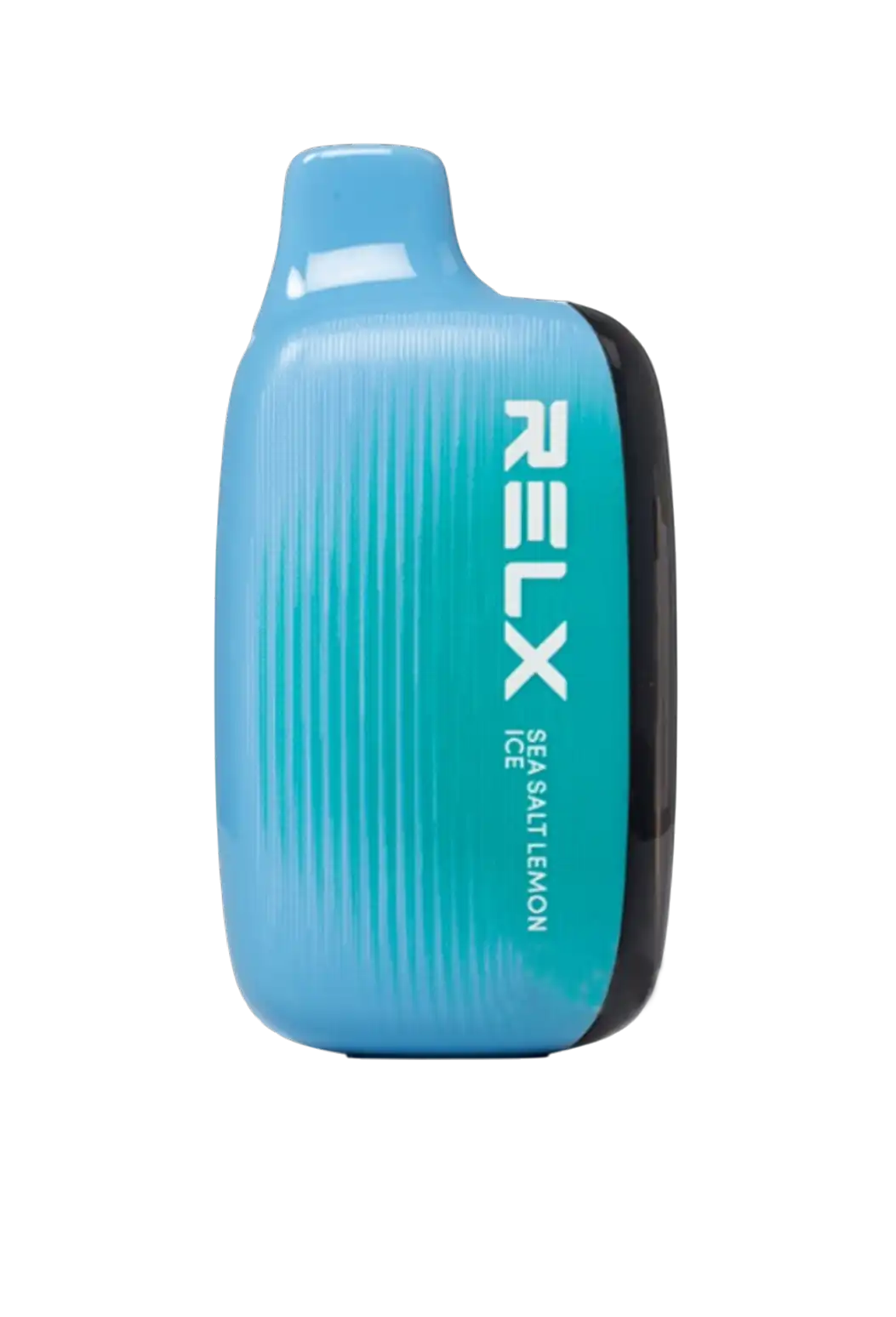

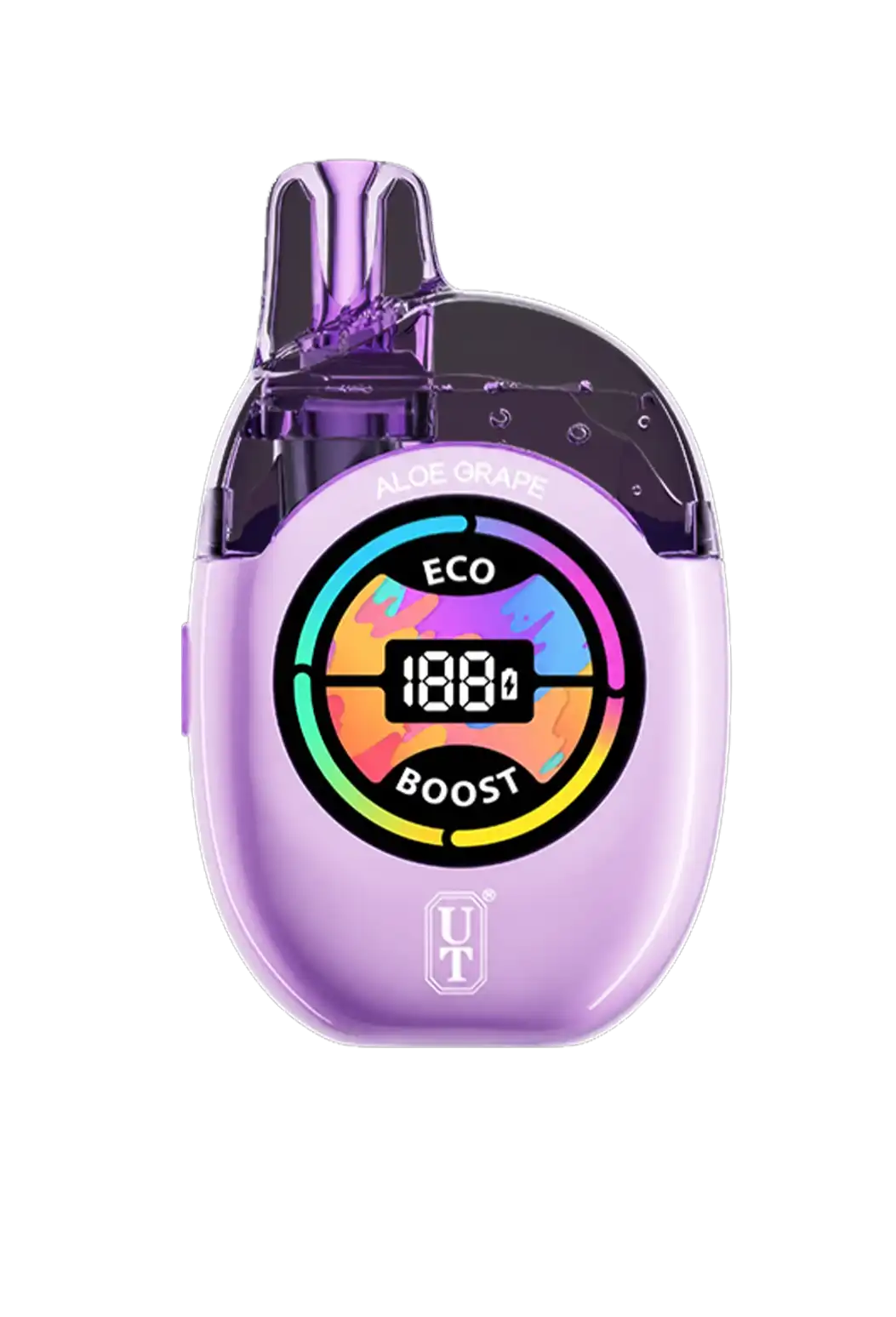

4 High-Puff Vapes Compared
The disposable vape market has increasingly moved toward higher puff counts, with 30K and 50K devices now commonly appearing across the high-puff segment, while newer products are pushing the category toward 60K, 70K, and even 100K claims. At the same time, high puff counts are no longer determined by e-liquid capacity alone. Rechargeable batteries, mesh coils, adjustable airflow, multiple power modes, transparent tanks, and digital displays have become increasingly common ways for manufacturers to differentiate high-capacity devices. This makes comparing high-puff vapes by the number printed on the box less straightforward. E-liquid capacity, coil configuration, power output, and testing conditions can all influence how a puff rating is achieved. To see how these differences translate into actual product specifications, let’s take a closer look at four high-puff disposable vapes: the RELX Nova 30K, FLUM Mello Pro 50K, FLUM UT Bar Clear Tank 50K, and GEEK BAR Pulse X2.
The four products below illustrate why puff count should be considered together with e-liquid capacity, coil configuration, power system, and device design.
| Product | Rated Puffs | E-Liquid | Rated Puffs / mL |
|---|---|---|---|
| RELX Nova 30K | Up to 30,000 | 20 mL | 1,500 |
| FLUM Mello Pro 50K | Up to 50,000 | About 15 mL | About 3,333 |
| FLUM UT Bar Clear Tank 50K | Up to 50,000 | 18 mL | About 2,778 |
| GEEK BAR Pulse X2 | Up to 50,000 | 18 mL | About 2,778 |
RELX Nova 30K
The RELX Nova 30K is rated for up to 30,000 puffs and contains 20 mL of pre-loaded e-liquid. It uses a ceramic coil, fixed airflow, a 600mAh battery, and a 12W output.
Its 30,000-puff rating corresponds to 1,500 rated puffs per mL based on the stated capacity. Because the airflow is fixed and the output is specified at 12W, its operating profile is comparatively straightforward to describe.
FLUM Mello Pro 50K
The FLUM Mello Pro 50K is rated for up to 50,000 puffs with approximately 15 mL of e-liquid. It uses dual mesh coils, a 650mAh battery, USB-C charging, and adjustable airflow.
The simple capacity calculation gives approximately 3,333 rated puffs per mL. Because the device includes adjustable airflow and different operating features, actual use can vary from the conditions behind the advertised rating.
FLUM UT Bar Clear Tank 50K
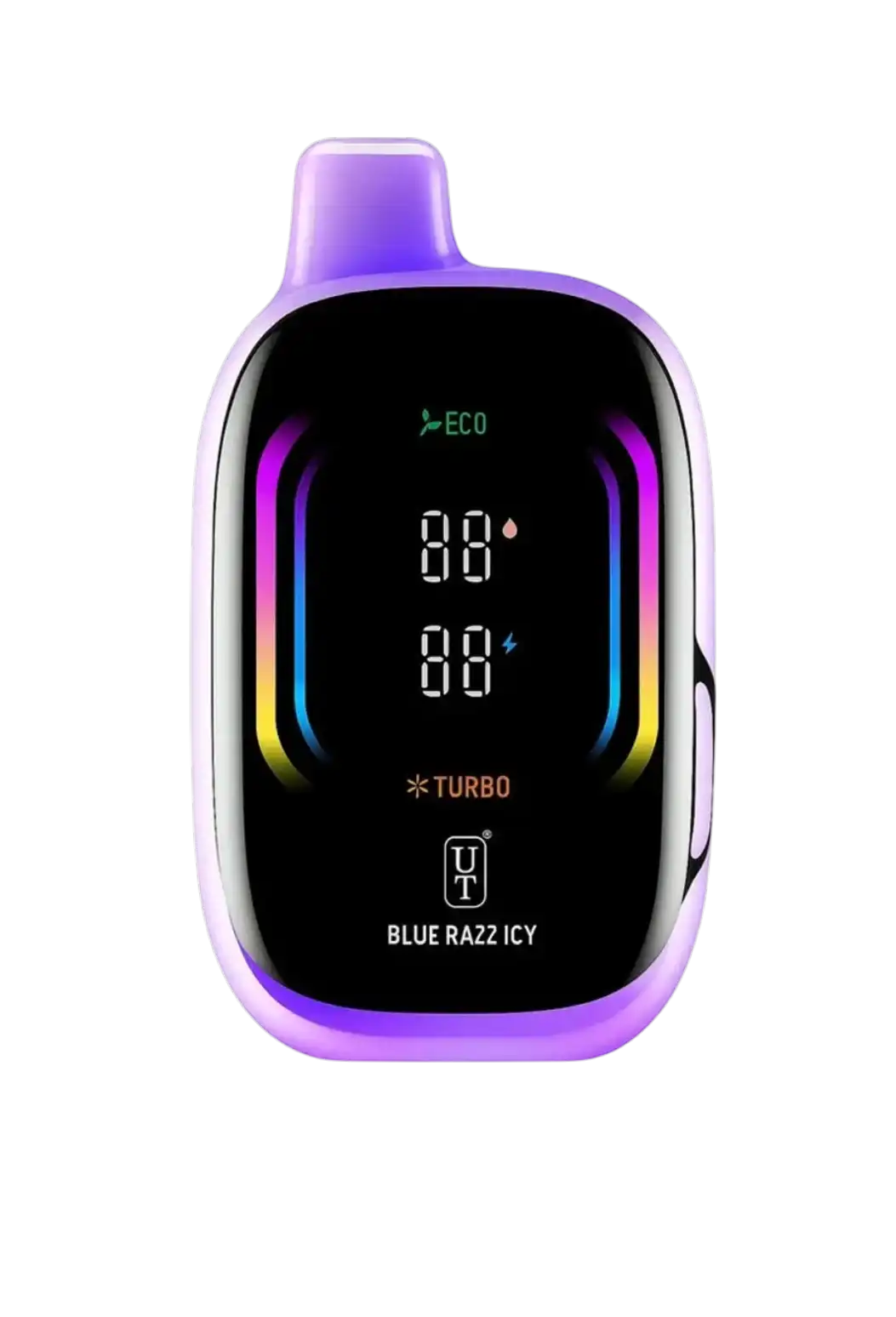
The FLUM UT Bar Clear Tank 50K combines an 18 mL transparent tank with dual mesh coils and a rechargeable 900mAh battery. Its advertised capacity is up to 50,000 puffs.
With 18 mL of liquid, the simple advertised ratio is approximately 2,778 rated puffs per mL. Its transparent tank also provides a practical advantage when estimating remaining liquid because the user can visually inspect the reservoir.
GEEK BAR Pulse X2
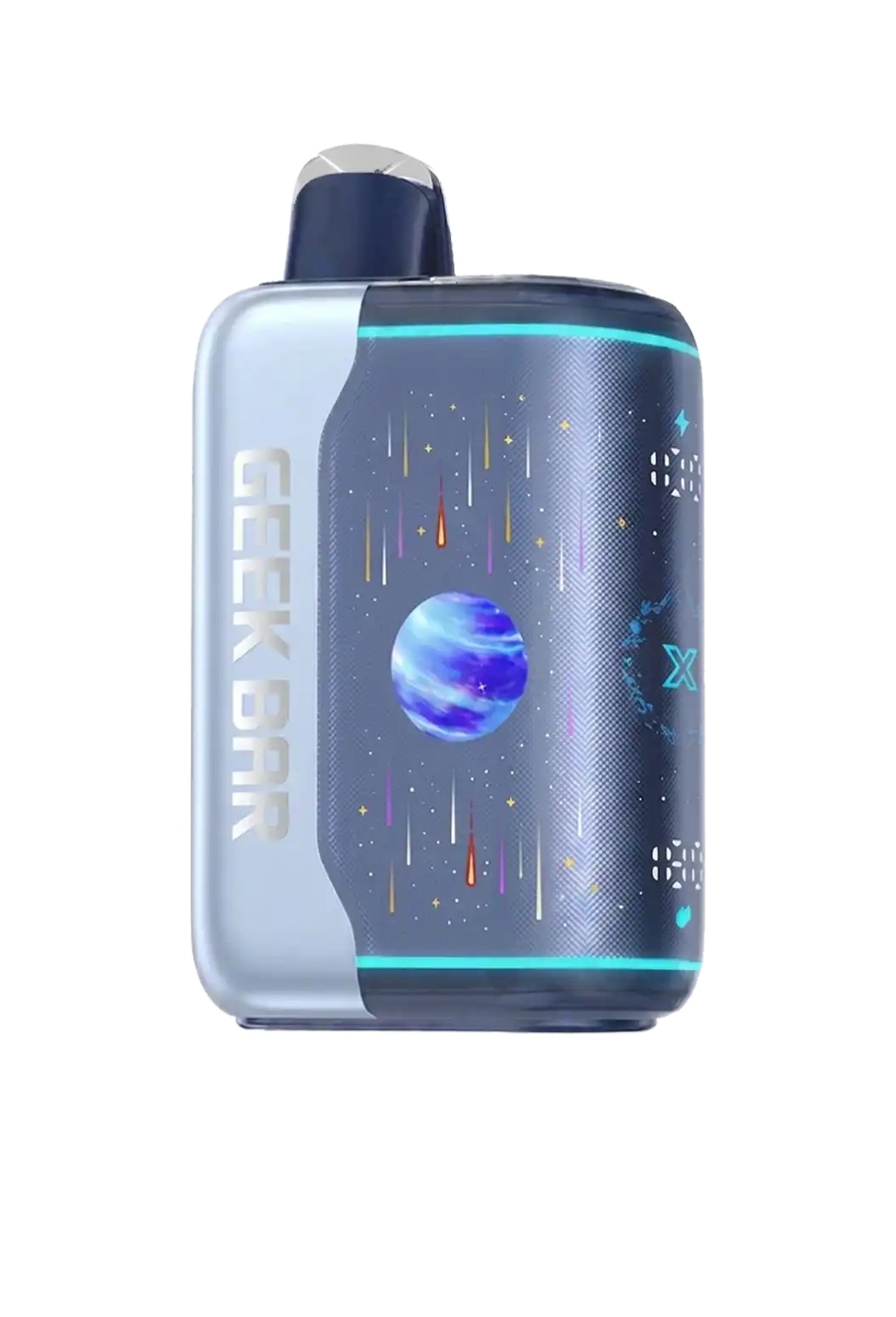
The GEEK BAR Pulse X2 is rated for up to 50,000 puffs in Regular Mode and uses an 18 mL e-liquid capacity, a 1000mAh internal battery, and dual 0.6Ω mesh coils.
Its simple advertised ratio is also approximately 2,778 rated puffs per mL. Because the device uses a low-resistance dual-mesh configuration and supports different output behavior, its puff count should be understood as a test-dependent rating rather than a fixed amount of liquid consumed by every personal puff.
How Should You Compare Big Puff Counts?
When comparing a high-puff vape, looking only at the largest number on the box can be misleading. A more useful comparison combines at least four dimensions: advertised puff count, e-liquid capacity, operating configuration, and how easily the user can monitor remaining liquid.
| Comparison Dimension | What to Look At | Why It Matters |
|---|---|---|
| Puff Count | 30K, 50K, etc. | Shows the manufacturer’s rated test result |
| E-Liquid Capacity | mL of usable liquid | Provides context for the advertised puff number |
| Coil & Power | Resistance, mesh design, wattage | Can affect aerosol generation and liquid consumption |
| Liquid Visibility | Transparent tank or display | Makes remaining liquid easier to monitor |
| Puff Method | 1-second, ISO 55/3/30, or other regime | Determines what the advertised number actually represents |
So, when asking “how long does a vape last?”, the most accurate answer is that it depends on both the device and the way it is used. A 50,000-puff device does not necessarily provide the same real-world duration for every person, and a 30,000-puff device should not automatically be assumed to last exactly 40% less time.
The better question is: Under what test conditions was the puff count measured, how much e-liquid does the device contain, and how does its coil and power system affect liquid consumption?
That approach makes it easier to understand big puff counts without treating them as a universal unit of vaping time.
Final Takeaway
A high-puff vape should not be judged by puff count alone. The number printed on the package is the result of a particular testing methodology, while real-world performance depends on e-liquid capacity, puff duration, airflow, coil resistance, power, and individual vaping behavior.
For a more meaningful comparison, look at the puff rating together with the e-liquid capacity and the device’s heating configuration. Once you understand how puff counts are measured, the difference between a 30K, 50K, or other big puff count becomes much easier to interpret.
FAQ
Q1 How many mL are in one vape puff?
There is no universal mL-per-puff value. A simple 2 mL ÷ 1,000-puff calculation gives 0.002 mL per rated puff, but laboratory studies have measured substantially different liquid consumption depending on coil resistance, power, puff duration, and user behavior.
Q2 What is the 55/3/30 puffing method?
The 55/3/30 regime uses a 55 mL puff volume, 3-second puff duration, and a 30-second interval between puffs. It is associated with CORESTA Recommended Method No. 81 and ISO 20768 for controlled analytical vaping-machine testing.
Q3 Why can two 50K disposable vapes last different amounts of time?
Because puff count depends on more than liquid capacity. Coil resistance, power, airflow, puff duration, puff volume, liquid formulation, and the testing method can all influence how much liquid is consumed per puff.
Q4 Does a higher wattage always mean fewer puffs?
Not necessarily in every device, but higher power can increase heating intensity and liquid consumption under comparable conditions. Published studies have demonstrated substantial changes in liquid consumption and aerosol generation when power and coil resistance are changed.
Q5 Is 50,000 puffs the same as 50,000 personal vaping sessions?
No. A rated puff is defined by the test conditions used to obtain the manufacturer’s number. Individual users can take longer or shorter puffs, draw different volumes of air, and use different intervals between puffs.
Q6 Why don’t I get as many puffs as the advertised number?
It is normal for the number of puffs you get in actual use to differ from the advertised puff count. A product’s puff rating is based on a specific testing method, while real-world use varies from person to person and from device to device.
First, there is no single universal rule that requires every manufacturer to use exactly the same puff-count methodology. Different testing protocols can specify different puff durations, puff volumes, airflow rates, intervals between puffs, and endpoint criteria. For example, ISO 20768 and the CORESTA Recommended Method No. 81 use a controlled 55 mL puff lasting 3 seconds with a 30-second interval between puffs, while some commercial product-rating methods use different conditions. This means that two products with similar e-liquid capacities can arrive at different advertised puff counts depending on how they are tested.
Your own puffing style is another major factor. A longer or deeper draw generally moves more air through the device and can increase the amount of e-liquid consumed per puff. Human-use studies have demonstrated substantial variation in puff duration and puff volume. One 24-hour study of regular e-cigarette users found an average puff duration of 3.0 seconds and an average puff volume of 73.4 mL, with individual users showing much wider ranges.
For comparison, another study found average puffs of approximately 51 mL and 2.65 seconds, while research comparing different devices found mean puff volumes of 52.2 mL and 83.0 mL depending on the product being used. These differences help explain why a manufacturer’s rated puff count should not be interpreted as a fixed number that every user will achieve.
The amount of e-liquid in the device also matters, but e-liquid capacity alone does not determine the final puff count. Coil resistance, heating power, airflow, coil condition, and the amount of liquid consumed during each puff can all affect how quickly the reservoir is depleted. In other words:
Actual Puff Count ≈ Usable E-Liquid ÷ E-Liquid Consumed Per Puff
If you take larger or longer puffs, the denominator in this calculation becomes larger, so the total number of puffs can decrease even when the device contains the same amount of e-liquid.
Finally, the amount of time a vape has been stored or left unused can also matter. E-liquid can undergo chemical changes during storage, while the condition of the coil, wick, battery, and other components can also change over time. Therefore, a device that has been stored for a long period should not necessarily be expected to perform exactly like a freshly manufactured device tested under controlled conditions.
For these reasons, the advertised puff count is best understood as a test-based maximum or rating under specified conditions, rather than a guarantee of the exact number of puffs every user will obtain. If your actual number is lower, the difference does not necessarily mean that the product is defective; your puffing pattern and the conditions used to generate the advertised number may simply be different.