USA
 Italy
 France
 UK
 Germany
 Japan

Global heated tobacco product (HTP) use reached an estimated 48.9 million users in 2024, according to a 2026 study published in JMIR Public Health and Surveillance. An alternative calculation based entirely on heated-tobacco stick shipments produced a higher estimate of 67.9 million users, illustrating how methodology affects estimates of the global HNB market. A separate systematic review covering 42 countries and areas found a pooled current-use prevalence of 1.53% across studies published from 2015 to 2022. Drawing on academic research, European Commission analysis and published market estimates, this report examines the available evidence on heated tobacco users, regional adoption, sales and market development from 2020 to 2026. It also explains which figures can be compared, where important data gaps remain, and what the evidence does—and does not—tell us about the future of heat-not-burn products.
How large is the global heated tobacco market in 2026?
Hover to see what the available statistics actually tell us.
The market has grown substantially.
A 2026 peer-reviewed study estimated 48.9 million global HTP users in 2024, with an alternative shipment-based estimate of 67.9 million. These are estimates for 2024, not a direct count of users in 2026.
Data note: This article distinguishes reported figures from calculated estimates. As of October 2026, the most recent global user time series identified for this article covers 2014–2024. The evidence below should therefore be read as a review of the 2020–2026 period using the latest available research, rather than a complete annual dataset through 2026.
Key Takeaways: Heated Tobacco Statistics at a Glance
- 48.9 million global HTP users in 2024: the primary estimate in a 2026 descriptive surveillance study published in JMIR Public Health and Surveillance.
- 45.6–52.1 million users: the uncertainty range around the study’s primary 2024 estimate.
- 67.9 million users in an alternative model: the same study’s shipment-only calculation, with a range of 59.7–78.7 million.
- 21.8 million users across 35 countries: the total estimated from national current-use prevalence surveys, representing partial geographic coverage rather than the entire global market.
- 1,096,076 participants across 45 studies: the evidence base of a systematic review and meta-analysis published in 2023.
- 4.87% pooled lifetime prevalence: the meta-analysis estimate for having ever used heated tobacco across the included studies from 2015 to 2022.
- 1.53% pooled current-use prevalence: the corresponding pooled estimate across the same evidence base and period.
- 0.79% pooled daily-use prevalence: the meta-analysis estimate for daily HTP use, with substantial variation between individual studies.
- 11 EU Member States with HTP market shares of at least 10%: identified in the European Commission’s 2025 analysis of the heated tobacco market.
- More than €4 billion in Italian HTP sales in 2023: the European Commission also reported approximately 14 billion consumable sticks sold in Italy that year.
Sources: JMIR Public Health and Surveillance (2026); Sun et al., systematic review and meta-analysis (2023); European Commission (2025).
1. Global Heated Tobacco Users: What Changed Between 2020 and 2024?
The clearest evidence of global HNB adoption comes from a 2026 study that reconstructed a time series of heated tobacco product users from 2014 to 2024. The researchers combined publicly available manufacturer disclosures with shipment-based calculations when direct user counts were unavailable. Their findings indicate sustained expansion over the decade, with growth accelerating after the early launch years.
The primary series estimated 48.9 million global HTP users in 2024, compared with negligible user numbers in 2014. However, the study does not provide a direct, independently measured census of every HTP user worldwide. Some annual figures rely on assumptions about how many tobacco sticks an individual consumes.
Global HTP User Estimates and Methodological Differences
| Metric | Value | Source |
|---|---|---|
| Global HTP users, primary series, 2024 | 48.9 million | JMIR, 2026 |
| Primary-series uncertainty range, 2024 | 45.6–52.1 million | JMIR, 2026 |
| Shipment-only estimate, 2024 | 67.9 million | JMIR, 2026 |
| Shipment-only uncertainty range, 2024 | 59.7–78.7 million | JMIR, 2026 |
| Survey-based estimate across 35 countries | 21.8 million | JMIR, 2026 |
The gap between the primary estimate and the shipment-only estimate is not evidence that one number must be incorrect. The methods use different assumptions. The primary series incorporates company-reported user figures where available and converts shipments into implied users for some company-year observations. The alternative series converts all shipments using a common literature-based consumption estimate.
The survey-based figure is different again. It combines current-use prevalence from 35 countries and therefore represents only the populations covered by those surveys. It should not be treated as a competing global total.
What this means: Global heated tobacco adoption is clearly substantial, but any claim about the exact number of users depends on how researchers define a user, handle incomplete country coverage and convert product sales into individual use.
2. Heated Tobacco Use Prevalence: What Population Studies Reveal
User totals estimate the number of people who use HTPs, while prevalence measures the proportion of a defined population reporting use. These metrics answer different questions. Prevalence can help compare adoption across populations, but only when age groups, survey definitions, dates and sampling methods are sufficiently similar.
A systematic review published in 2023 analysed 45 studies involving 1,096,076 participants across 42 countries and areas. It estimated pooled lifetime, current and daily HTP use prevalence across studies conducted between 2015 and 2022.
The review estimated pooled current HTP use prevalence at 1.53% across the included studies, while pooled lifetime prevalence was 4.87%. These are pooled estimates across the review’s evidence base, not a direct measurement of the global population in 2026.
| Prevalence Metric | Pooled Estimate | 95% Confidence Interval |
|---|---|---|
| Lifetime HTP use | 4.87% | 4.16%–5.63% |
| Current HTP use | 1.53% | 1.22%–1.87% |
| Daily HTP use | 0.79% | 0.48%–1.18% |
Source: Sun et al., Global prevalence of heated tobacco product use, 2015–22: A systematic review and meta-analysis, published in Addiction in 2023.
How should lifetime, current and daily use be interpreted?
Lifetime use generally indicates that a respondent has tried a product at least once. Current use describes use within the timeframe specified by a survey, while daily use identifies a narrower group. These measures should not be substituted for one another.
The pooled lifetime estimate of 4.87% being higher than the pooled current-use estimate of 1.53% is consistent with the fact that trying a product and currently using it are different behaviours. However, the percentages are pooled estimates from multiple studies, so subtracting one from another does not establish the proportion of people who stopped using HTPs.
The review also reported substantial heterogeneity between studies. Differences in country, survey year, respondent age and measurement methods limit the extent to which the pooled values can describe any single market.
Key insight: Prevalence studies are useful for understanding adoption, but they cannot be converted into a precise 2026 global user count without additional population data and compatible definitions.
3. Regional Heated Tobacco Market Trends: Europe and Asia-Pacific
HTP adoption is uneven across countries. Product availability, consumer preferences, regulation, taxation and the timing of market entry can all affect sales and reported use. The available evidence suggests that Japan, South Korea and several European markets have been particularly important to the development of heated tobacco.
The 2026 global user study found that five countries accounted for 78.5% of its survey-based total of 21.8 million users. Those countries were Japan, South Korea, Italy, Ukraine and Germany. The underlying country estimates were drawn from surveys conducted in different years, so they should not be read as a simultaneous 2026 ranking.
| Country | Survey-Based HTP User Estimate | Data Year |
|---|---|---|
| Japan | 10.6 million | 2023 |
| South Korea | 2.6 million | 2022 |
| Italy | 2.1 million | 2023 |
| Ukraine | 1.0 million | 2023 |
| Germany | 0.7 million | 2023 |
Source: JMIR, 2026. These estimates are based on the latest relevant national surveys used in the study, not a uniform survey conducted in the same year across all five countries.
Europe: Significant differences between national markets
The European Commission’s 2025 analysis found substantial differences in heated tobacco market penetration among EU Member States. Eleven countries—Bulgaria, Czechia, Greece, Hungary, Italy, Lithuania, Poland, Portugal, Slovenia, Slovakia and Sweden—had HTP market shares of at least 10% under the analysis’s measure.
By contrast, the Commission identified six Member States where the product category had not yet gained comparable traction. This difference illustrates why the overall European market should not be treated as a single uniform consumer market.
The Commission also noted that some of the increase in sales reflected the expansion of product availability into additional countries and areas. Sales growth therefore cannot automatically be interpreted as an equivalent increase in adoption among existing consumers.
Italy: A major market by sales value and volume
Italy recorded more than €4 billion in heated tobacco sales and approximately 14 billion consumable sticks in 2023, according to the European Commission’s 2025 working document. These two metrics provide complementary views of market scale: revenue measures sales value, while stick volume measures the number of consumable units sold.
Neither metric directly indicates the number of individual users. Consumption frequency, product prices and the distinction between occasional and regular users all affect how sales translate into user estimates.
Source: European Commission, 2025 working document on heated tobacco products.
4. Heated Tobacco Sales and Market Growth: What the Numbers Measure
Market growth is often discussed using revenue, unit sales, market share or the number of users. Although these indicators are related, they measure different things. Revenue can rise because of higher prices, unit sales can increase without a proportional increase in unique users, and market share can grow because other tobacco categories are shrinking.
For a reliable analysis of the global heat-not-burn market, each statistic needs a clear definition and reference period. The distinction matters especially when comparing market-research forecasts with government sales statistics or manufacturer disclosures.
| Indicator | What It Measures | Main Limitation |
|---|---|---|
| Market revenue | The monetary value of sales within a defined market. | May reflect price changes, taxes, currency movements and different market definitions. |
| Consumable stick sales | The volume of heated-tobacco sticks sold or reported. | Does not directly count unique users or confirm that every sold unit was consumed. |
| Market share | The proportion of a defined market represented by HTPs. | Depends on the denominator, such as sales value, product volume or tobacco category. |
| Number of users | People who meet a study’s definition of HTP use. | Depends on definitions, survey coverage, reference periods and estimation assumptions. |
| Market forecast | A modelled projection of future market size or growth. | Depends on assumptions, forecast period, product scope and market-research methodology. |
For example, the European Commission’s reported Italian sales value of more than €4 billion in 2023 should not be compared directly with the global user estimate of 48.9 million in 2024. One is a country-level monetary sales figure; the other is a global estimate of individual users for a different year.
Commercial market-research firms publish forecasts for the heated tobacco products market, but their estimates can differ because they include different product categories, geographies and sales channels. A forecast should therefore be cited together with its source, base year, forecast period and market definition.
One commercial research source is Grand View Research’s heated tobacco products market analysis. Its estimates should be treated as commercial market modelling rather than official government statistics. This article does not combine its forecast values with user estimates because they measure different things.
Key insight: There is no single market-growth number that can replace user, sales-volume and revenue data. A sound HNB market analysis should report these indicators separately and explain how each was calculated.
5. Heated Tobacco Technology, Product Adoption and Market Access
Market adoption also depends on the availability of compatible devices and consumables, product design, local regulations and the cost of continued use. However, product specifications alone cannot establish market share, user growth or consumer preference. Those conclusions require sales, survey or other market evidence.
HTPs heat specially prepared tobacco rather than burning it in the same way as a conventional cigarette. The category is distinct from e-cigarettes, which generally heat a liquid to create an aerosol. The U.S. Food and Drug Administration explains this distinction in its overview of non-combusted cigarettes and e-cigarettes.
Why market definitions matter
Some reports use “heated tobacco,” “heat-not-burn,” “HTP” or “non-combusted cigarettes” to describe the product category. Although these terms often overlap, the precise scope should always be checked. A study may cover tobacco sticks and their compatible devices, while another may focus on consumable sales, manufacturer shipments or a narrower set of brands.
Device availability also varies by country. Regulatory authorisation, restrictions on tobacco products, taxation and retail distribution can all affect whether a product is sold in a particular market. The European Commission’s findings on differences between Member States illustrate how uneven market access can be.
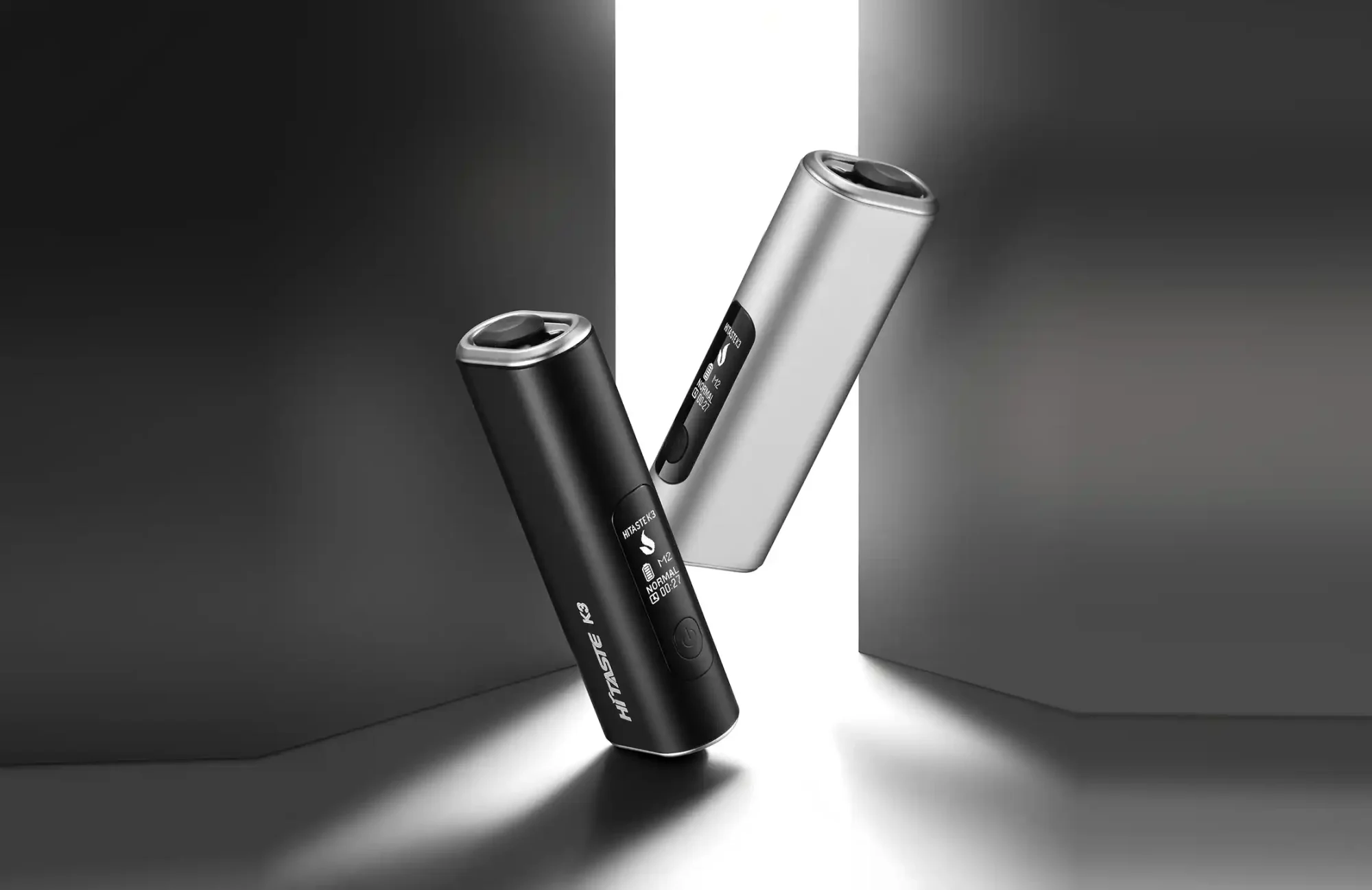
For readers interested in the device category itself, MYVAPOR provides product reference pages for the HiTaste F2 tobacco heater and HiTaste K3 HNB device. These pages describe individual product features; they should not be interpreted as independent evidence of category-wide adoption or market share.
Market statistics also do not establish that heated tobacco is safe. HTPs contain tobacco and typically deliver nicotine, an addictive substance. The U.S. Centers for Disease Control and Prevention summarises the current evidence and public-health considerations in its overview of heated tobacco products.
Key insight: Product innovation and market access can help explain differences between national markets, but sales or prevalence data are needed to quantify their actual effects. Product features should not be used as substitutes for evidence of consumer adoption.
6. What Can We Reliably Say About Heated Tobacco in 2025–2026?
Although this article covers the period through 2026, a major limitation remains: the latest global user series identified here ends in 2024. A report published in 2026 can provide the most recent analysis without containing complete data for 2026 itself.
There are three useful conclusions from the available evidence.
First, global adoption is substantial
The 2026 user-estimation study places the primary global HTP user estimate at 48.9 million for 2024. Its alternative shipment-based model gives a higher estimate, but both approaches indicate that the category has expanded considerably since its early launch years.
Second, adoption is geographically concentrated
The survey-based estimates highlight Japan, South Korea and Italy among the largest national HTP markets in the study’s covered population. The European Commission’s analysis also shows substantial differences in market penetration between EU Member States. These findings indicate that global totals can conceal important regional variation.
Third, better measurement is still needed
The differences between shipment-based estimates, manufacturer-reported user figures and national survey totals show why a single number should not be treated as definitive. Wider survey coverage and consistent definitions of current and daily use would make future comparisons more reliable.
As of October 2026, the available evidence does not justify presenting an unverified global user count for 2025 or 2026 as an established fact. Newer national surveys, official sales releases and manufacturer disclosures may add useful information, but they should be checked individually and compared only when their definitions and time periods are compatible.
Global Heated Tobacco Statistics by the Numbers
The following table consolidates the strongest figures discussed in this article. Each number is paired with its source and data period to help readers distinguish global estimates from national figures and pooled research findings.
| Metric | Value | Source / Period |
|---|---|---|
| Global HTP users, primary estimate | 48.9 million | JMIR, 2024 data |
| Primary estimate range | 45.6–52.1 million | JMIR, 2024 data |
| Shipment-only user estimate | 67.9 million | JMIR, 2024 data |
| Shipment-only estimate range | 59.7–78.7 million | JMIR, 2024 data |
| Survey-based users across 35 countries | 21.8 million | JMIR, national survey data |
| Studies in global prevalence review | 45 studies | Addiction, 2023 |
| Participants in prevalence review | 1,096,076 | Addiction, 2023 |
| Countries and areas covered by review | 42 | Addiction, 2015–2022 studies |
| Pooled lifetime HTP prevalence | 4.87% | Addiction, 2015–2022 studies |
| Pooled current-use prevalence | 1.53% | Addiction, 2015–2022 studies |
| Pooled daily-use prevalence | 0.79% | Addiction, 2015–2022 studies |
| Countries with EU HTP market share of at least 10% | 11 Member States | European Commission, 2025 analysis |
| Italian HTP sales value | More than €4 billion | European Commission, 2023 sales |
| Italian HTP consumable stick sales | Approximately 14 billion sticks | European Commission, 2023 sales |
| Japan survey-based HTP user estimate | 10.6 million | JMIR, 2023 survey data |
| South Korea survey-based HTP user estimate | 2.6 million | JMIR, 2022 survey data |
| Italy survey-based HTP user estimate | 2.1 million | JMIR, 2023 survey data |
| Ukraine survey-based HTP user estimate | 1.0 million | JMIR, 2023 survey data |
| Germany survey-based HTP user estimate | 0.7 million | JMIR, 2023 survey data |
Source note: The figures above come from three principal sources: the 2026 global user-estimation study, the 2023 prevalence meta-analysis and the European Commission’s 2025 analysis. They are not all measurements of the same population, year or metric. The table is a reference guide, not a single continuous time series.
External Sources and Further Reading
- Global Heated Tobacco Product User Estimates, 2014–2024 — the main source for global user estimates and the comparison between manufacturer-disclosure and shipment-only methods.
- Global prevalence of heated tobacco product use, 2015–22 — systematic review and meta-analysis of prevalence studies.
- European Commission, 2025 working document — regional market trends, Member State differences and Italian sales data.
- Grand View Research: Heated Tobacco Products Market — commercial market analysis and forecasts; review the firm’s market definition before comparing its figures with other sources.
- U.S. FDA: How are non-combusted cigarettes different from e-cigarettes? — background on the distinction between heated tobacco and e-cigarettes.
- U.S. CDC: Heated Tobacco Products — public-health context and evidence on HTPs.
Conclusion: The Heated Tobacco Market Is Growing, but Measurement Still Matters
Available research indicates that heated tobacco has become a substantial global product category, with the 2026 global user-estimation study placing the primary 2024 estimate at 48.9 million users. The same study’s alternative shipment-based calculation reached 67.9 million, while national survey data provided a lower, geographically incomplete total of 21.8 million across 35 countries.
Regional evidence shows that adoption is far from uniform. Japan and South Korea are prominent in the survey-based user estimates, Italy is a major European market by sales value and stick volume, and the European Commission has identified meaningful differences in market penetration among EU Member States.
For 2026 readers, the central limitation is the lack of a single, verified global user count covering the full year. The most useful way to track future changes is to monitor consistent user estimates, national prevalence surveys, official sales data and clearly defined market forecasts separately.
These statistics describe product use and market development. They do not establish that heated tobacco is safe or risk-free. HTPs contain tobacco and generally deliver addictive nicotine, and their health implications should be assessed using authoritative public-health evidence rather than market-growth figures.